
What does it take to be a great language teacher?

“Tell me and I forget, teach me and I may remember, involve me and I learn.” – (Benjamin Franklin)

The teacher is one of the single most important components of the language leanrning experience and their teaching style can make the difference between a successful learning outcome for the language student and one in which the student loses confidence in their ability to learn a second language.

Not only will the way a language is taught ultimately determine whether the student will indeed learn the language, it will also influence the way their student’s view language learning in the future. A boring, or uninterested teacher can not only compromise their students’ success with their language learning, they can also instil in their students the belief that they are bad language learners.

So, what is the recipe? In no particular order, and by no means comprehensive, the following list are some key ingredients for being an exceptional language teacher:

Do the languages we speak influence the way we perceive the world?

Do people who speak different languages, whether it’s English, Spanish, Mandarin or any one of the 7000 odd languages in existence, end up remembering and understanding their respective life experiences differently simply by virtue of their mother tongue? An article in the Wall Street Journal explains how recent research suggests that the answer may be yes.

The idea that language might shape thought is not a new one as evinced by  quotes implying just that such as this one by the Austrian philosopher, Ludwig Wittgenstein :

“If we spoke a different language, we would perceive a somewhat different world.” 

However, the hypothesis has generally been believed to be untestable at best and slightly “off the wall” or relegated to the loony fringes of disrepute at worst.

Now the recent cognitive science research indicates that not only does our language indeed profoundly influence how we see the world, it can also affect our understanding of even such fundamental concepts as space, time and causality.

Read more: Do the languages we speak influence the way we perceive the world?

Are Kiwi students “Asia Ready”?

Our first two days exhibiting at the 2013 NZPF Conference in Hamilton have underscored the fact that there is a growing need for Mandarin as an in-school language option for all New Zealand students with a genuine interest from school principals across the board.  And with a talk on Friday by John McKinnon, executive director of the Asia New Zealand Foundation, on why ‘Asia Aware’ students are important, delegates and speakers alike clearly acknowledge the key role of Asia in New Zealand’s future.

A recent survey commissioned by the foundation to determine the ‘Asia Readiness’ of New Zealand secondary students found that only 9% of NZ secondary students were what they considered to be “Asia ready”.  The “Asia Readiness Framework”, the key facets of which are knowledge of Asia, cultural intelligence and language, recognises that being “Asia Ready” is as much about an interest and willingness to engage with Asia as it is about the ability to communicate in an Asian language.

The report found that although most New Zealand secondary school students understand the importance of Asia, they feel under-prepared to engage confidently with the region – a finding which clearly demonstrates that “there is a need to increase Asia-related content across the entire school curriculum.”

With the conference theme for 2013 being “Power to Innovate”, we’re looking forward to hearing about some innovative ideas and new solutions on how best to develop “global citizens” who understand the nuances of Asian culture and business practices and who can speak Mandarin and/or other Asian languages.

See the full survey results here

Read more here and here

Language Acquistion vs. Language Learning

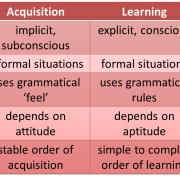
There is an important distinction made by linguists between ‘language acquisition’ and ‘language learning’.

“Acquisition requires meaningful interaction in the target language – natural communication – in which speakers are concerned not with the form of their utterances but with the messages they are conveying and understanding.” Stephen Krashen (The Natural Approach)

There is an innate capacity for every human being to acquire language and the term ‘language acquisition’ refers to the ways that people acquire language naturally, outside of formal instruction in things like grammar or vocabulary. A child’s need to communicate paves the way for the acquisition of their mother tongue through natural communication and meaningful interaction both with parents and their surrounding environment. This is a subconscious process during which they are unaware of grammatical rules and where the emphasis is on the content of the communication and not the form. Error correction and explicit teaching of rules are not relevant to language acquisition.

Free Cultural Experience at your school!

Free offer to all Australasian Primary and Intermediate Schools!

An experience of a foreign country without the travelling!

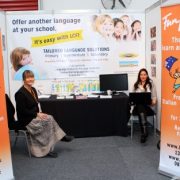
Based on 25 years of language teaching experience, LCF Fun Languages is pleased to offer a complimentary culture session (either French, Spanish or Mandarin) for your school.

Our fun cultural experience will be 1-2 hours full of games, songs, food, local culture for your children to enjoy. Our sessions are aimed at introducing children to the culture and a little bit of language, our main aim is to engage children’s imagination so they want to know more. We want to teach children about other cultures in fun way, to encourage and inspire an interest in different cultures and languages.

To register for your session simply CLICK HERE

Hurry availability is limited!  Subject to teacher availability in your area – language of choice may vary

Why do parents love LCF Fun Languages?

It gets their children using the language quickly and naturally

“As parents, we know that engaging pre-schoolers in any activity, particularly new activities, is a big challenge but I have found the Spanish group teacher has all the right tricks through song, dance and group activities to bring even the shyest toddler along and engaged in learning. My three year old takes a while to open up but wow with only two lessons she has become mad keen to sing along in Spanish after each lesson, she sings in the car, at home and can’t wait for Friday to come along and use her new skills. Not only is she picking up words in Spanish at the speed of lightning but it also doing wonders for her confidence in a group setting.’ Thank you. (Susie, Adelaide)

“Since joining the French for Kids Club, Alexandra is exciting about anything to do about Paris, Eiffel Tower, French etc. She likes to learn more about French at home and me and my wife just can’t believe how she pronounce the words with the French accent.” (French for Kids club, Newcastle, NSW)

How do our Kiwi principals feel about offering a second language?

We conducted a “mini survey” at the recently held New Zealand Principal’s Federation Conference in Hamilton, NZ to get an idea of how principals felt about the importance of offering a second language at their school.  The results confirmed what we already knew and the emerging trends with languages in New Zealand:

  • 89% of principals surveyed consider is very or extrememly important to offer a language.  We LOVE that!
  • 44% of surveyed principals consider languages a very or somewhat important factor in attracting foreign students their schools.
  • 77% of surveyed principals consider languages a very or somewhat important point of difference in attracting students to their school.
  • In terms of language preference, Mandarin Chinese interest is growing, with Spanish and French still considered important by most schools.

What is great is the increase in the demand for languages by parents and their schools since Fun Languages has been operating in the market 14 years ago.

For anyone thinking of offering a language at their school, it is easy to start an after-school fun language club in most areas.

We are also offering a Free Language and Cultural Experience to schools in New Zealand and Australia – so why not find out how we can help you jump on this bandwagon!

New partnership with Kids Planet,

LCF Fun Languages is delighted to be partnering with Kids Planet in Albany, Auckland, to provide a bilingual program to the lucky children in their new transition room. This brand new area at Kids Planet will provide a perfect linguistic environment for the children to explore our play-based language programs. We were very excited that Chinese TV station Channel 9 has already come to film on the very day that the furniture was being delivered.

Have a look at the news item and how excited everyone is about the partnership!

“Monolingualism is the illiteracy of the 21st Century”

Time Magazine recently published an article that once again illustrates the plethora of benefits that kids gain by being bilingual and stresses the importance of giving children the opportunity to learn a second language.  And starting the langage learning journey as early as possible!!

A move by state education officials to introduce an ambitious total immersion language educaton program in Utah in the US, arose out of ‘millenial parents’ (and the state) seeing the need for language education training.  The move is less about globalisation – although that is a part of it – and more to do with realising the full potential of the nimble minds learning the languages and the benefits that learning a second language confers on them. Ignoring these benefits and advantages in a polyglot world, is done at one’s peril.

Read more here

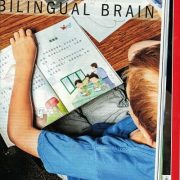
Research is increasingly showing that there is a difference in the brains of people who speak more than one language and that it’s for the better. From conflict resolution and multitasking to retention of the faculties for longer and improved cognitive function there is proof positive that bilingual or multilingual brains, although not necessarily smarter, are definitely more flexible and resourceful than those of their monlingual counterparts

Why Teaching Languages Should Be One Big Joke!

For most of you reading this, you will already have first-hand experience of learning at least one other language. So, at what point can one consider oneself “fluent” in another language? Can you call yourself fluent in French if you can make it around a French market or order confidently in a restaurant without too many faux-pas and yet you may be stumped by a topical conversation on issues of the day?

However you measure your progress, they do say that as soon as you start to DREAM in another language, that your brain has started to acquire naturally the new language. What comes out of your mouth can be another matter (and the source of much hilarity, at times) but that is just a question of practice!

One of the better benchmarks for me is the understanding of idioms, puns and subtleties involved in jokes of your new language. And learning language should be FUN!

As a teacher of languages for many years, I have amused myself at passing on jokes as early as possible to my students, even the little ones.

Here are a couple of jokes that may liven up your lessons or classroom and will have the kids amusing themselves for weeks to come:

Teaching French numbers:
Two cats set out to swim across a river. Their names were “One Two Three” and “Un Deux Trois”.
However, as you know, cats cannot swim very well and only one of the cats made it across.
Which one succeeded and why?
Answer: “One Two Three” made it over because “Un Deux Trois” cat sank!
Get it?