
New partnership with Kids Planet,
LCF Fun Languages is delighted to be partnering with Kids Planet in Albany, Auckland, to provide a bilingual program to the lucky children in their new transition room. This brand new area at Kids Planet will provide a perfect linguistic environment for the children to explore our play-based language programs. We were very excited that Chinese TV station Channel 9 has already come to film on the very day that the furniture was being delivered.
Have a look at the news item and how excited everyone is about the partnership!
“Monolingualism is the illiteracy of the 21st Century”
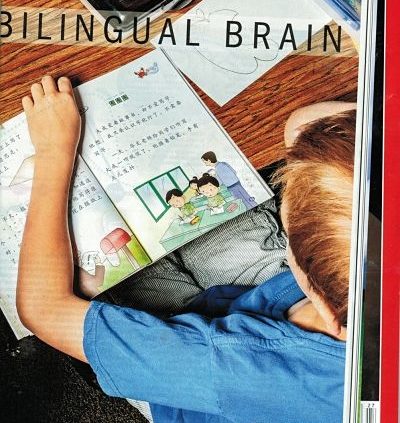
Time Magazine recently published an article that once again illustrates the plethora of benefits that kids gain by being bilingual and stresses the importance of giving children the opportunity to learn a second language. And starting the langage learning journey as early as possible!!
A move by state education officials to introduce an ambitious total immersion language educaton program in Utah in the US, arose out of ‘millenial parents’ (and the state) seeing the need for language education training. The move is less about globalisation – although that is a part of it – and more to do with realising the full potential of the nimble minds learning the languages and the benefits that learning a second language confers on them. Ignoring these benefits and advantages in a polyglot world, is done at one’s peril.
Research is increasingly showing that there is a difference in the brains of people who speak more than one language and that it’s for the better. From conflict resolution and multitasking to retention of the faculties for longer and improved cognitive function there is proof positive that bilingual or multilingual brains, although not necessarily smarter, are definitely more flexible and resourceful than those of their monlingual counterparts

Why Teaching Languages Should Be One Big Joke!
For most of you reading this, you will already have first-hand experience of learning at least one other language. So, at what point can one consider oneself “fluent” in another language? Can you call yourself fluent in French if you can make it around a French market or order confidently in a restaurant without too many faux-pas and yet you may be stumped by a topical conversation on issues of the day?
However you measure your progress, they do say that as soon as you start to DREAM in another language, that your brain has started to acquire naturally the new language. What comes out of your mouth can be another matter (and the source of much hilarity, at times) but that is just a question of practice!
One of the better benchmarks for me is the understanding of idioms, puns and subtleties involved in jokes of your new language. And learning language should be FUN!
As a teacher of languages for many years, I have amused myself at passing on jokes as early as possible to my students, even the little ones.
Here are a couple of jokes that may liven up your lessons or classroom and will have the kids amusing themselves for weeks to come:
Teaching French numbers:
Two cats set out to swim across a river. Their names were “One Two Three” and “Un Deux Trois”.
However, as you know, cats cannot swim very well and only one of the cats made it across.
Which one succeeded and why?
Answer: “One Two Three” made it over because “Un Deux Trois” cat sank!
Get it?

Why You May Never Learn Another Language!
“Is it hard to learn another language? Which is the easiest language to learn? How long will it take to learn another language?”
These are questions I am constantly being asked by adults… adults who often regret the fact that they never mastered another language and, for that reason, are now motivated to give their children the opportunity to learn a second or a third language.
“I wish, I wish…. “ are most often the two words that come out of their mouths first. And if you look at the questions that adults ask, they are all attached to an OUTCOME. Most of us, as adults, like to know where we are going when we embark on a new journey. “Where will it end? Will I be successful? What will the outcome be? Will I be any good?”
For adults who are thinking of learning another language, here is a great infographic on learning expectations for many languages, based on the amount of time it takes a native English speaker to achieve speaking and reading proficiency.

The Serendipity of Untranslatable Words
Being a speaker of several languages, I often find a foreign word popping into one of my sentences when I am speaking English. Those of you who speak another language may support me in the fact that, just sometimes, there is a so much more succinct way of expressing something in another language, where English can only resort to a string of words. The problem is also that this ONE foreign word may also evoke a different emotional response, or transport the speaker back into another world, that the non-
An example contributed by our South African staff member today was the Afrikaans slang word “KNUIPING” which indicated the clenching of the buttocks when experiencing fear in order to avoid an untimely accident! Well, that got us laughing and thinking…speaker will simply not understand.
The 5 Stages of Second Language Acquisition
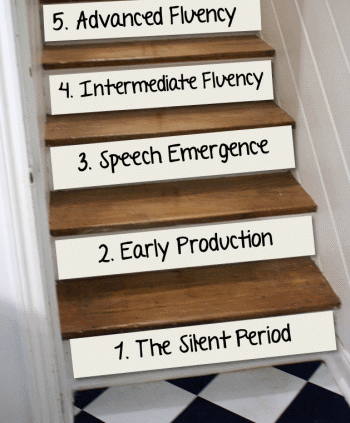
During childhood, the brain is more receptive to language learning than at any other time in a person’s life and starting foreign or second language learning early sets the stage for a child to develop advanced levels of proficiency in one or more languages. It is also increasingly being seen as a necessary 21st century skill set. Apart from the extensively researched and recognised cognitive benefits from learning one or more languages, doing so as a young child dramatically improves the development of a near-native pronunciation and language intonation.
More and more parents are accepting that knowledge of a language other than English (LOTE) can also enrich their child’s understanding and acceptance of other cultures, and the attendant future job opportunities it can bring in a world being brought ever closer together by increasing globalisation. So it’s no surprise that they are choosing to raise their child/ren as bilingual and/or give them the opportunity to learn a foreign language.